
%20(4).png)
Contact
Find us
- RCK Partners,
70 Gracechurch Street,
London,
EC3V 0HR.
© 2024 RCK Partners - Company House No: 12396021

.jpg)
We spoke to Anastasiya Kokonova, Capital Allowances Partner at RCK Partners, to explore the Structures and Buildings Allowance (SBA) and how it fits within capital allowances for structures and buildings in the UK.
While much of the focus around Capital Allowances is often on plant and machinery, SBA plays a crucial role in providing tax relief on the core structure of a building, costs that were historically ineligible for relief. From new developments to property acquisitions and refurbishments, understanding how SBA applies can help businesses unlock additional value, improve cash flow, and ensure no available relief is overlooked.
The Structures and Buildings Allowance (SBA), sometimes referred to as the structure and building allowance, provides tax relief on the cost of constructing or renovating non-residential buildings and structures. It is available to businesses that incur qualifying capital expenditure on commercial property, allowing them to claim relief over time against taxable profits.
SBA applies to most non-residential buildings, including offices, factories, warehouses and retail units. However, it does not apply to residential properties such as houses, flats or student accommodation. Mixed-use properties may qualify on a just and reasonable apportionment basis.
Qualifying costs typically include construction, renovation and conversion works, such as building structure, walls, roofs and fixed fabric of the property. It does not include land costs, planning permission, or items that qualify separately as plant and machinery.
SBA is currently claimed at a flat rate of 3% per annum on a straight-line basis over 33⅓ years. This means businesses receive consistent, but relatively slow, tax relief compared to other capital allowances.
Yes, SBA can be claimed by subsequent purchasers, provided the original construction qualified and the relevant documentation is available. The buyer effectively steps into the seller’s position and continues claiming the remaining allowance.
SBA is designed to support commercial investment, which is why residential buildings are excluded. For mixed-use properties, owners should apportion costs between qualifying commercial areas and non-qualifying residential areas on a reasonable basis.
SBA applies to the structure of a building and provides relief at a fixed 3% rate. In contrast, plant and machinery allowances apply to fixtures and equipment within a building and often attract faster relief, including upfront deductions through AIA or first-year allowances.
To claim SBA, businesses must retain detailed records including construction contracts, invoices, and a formal SBA statement. The statement should include key details such as the date the building was first brought into use and the total qualifying expenditure.
A common mistake is failing to identify and separate plant and machinery from structural costs, resulting in missed opportunities for faster relief. Another is not preparing or retaining the required SBA statement, which is essential to support a valid claim.
A specialist can ensure that qualifying costs are correctly identified and that no plant and machinery elements are incorrectly included within SBA. This helps maximise overall tax relief by accelerating claims where possible and ensuring compliance with the relevant legislation.
The Structures and Buildings Allowance is an important, but often underutilised, area of capital allowances for structures and buildings. While the relief is spread over a longer period, it can still represent significant value, particularly for businesses investing heavily in commercial property.
Ensuring that SBA is correctly identified, documented, and claimed alongside other available reliefs is key to maximising overall tax efficiency. With the right expertise, businesses can confidently navigate the rules, avoid common pitfalls, and make the most of the relief available to them.
If you’re unsure whether you’re claiming everything you’re entitled to, or would like to explore how SBA could benefit your business, get in touch with our team to discuss your property and uncover any missed opportunities.
Find out who can claim capital allowances in the UK, and which assets and property types qualify.
A step-by-step guide to making a capital allowance claim in the UK.
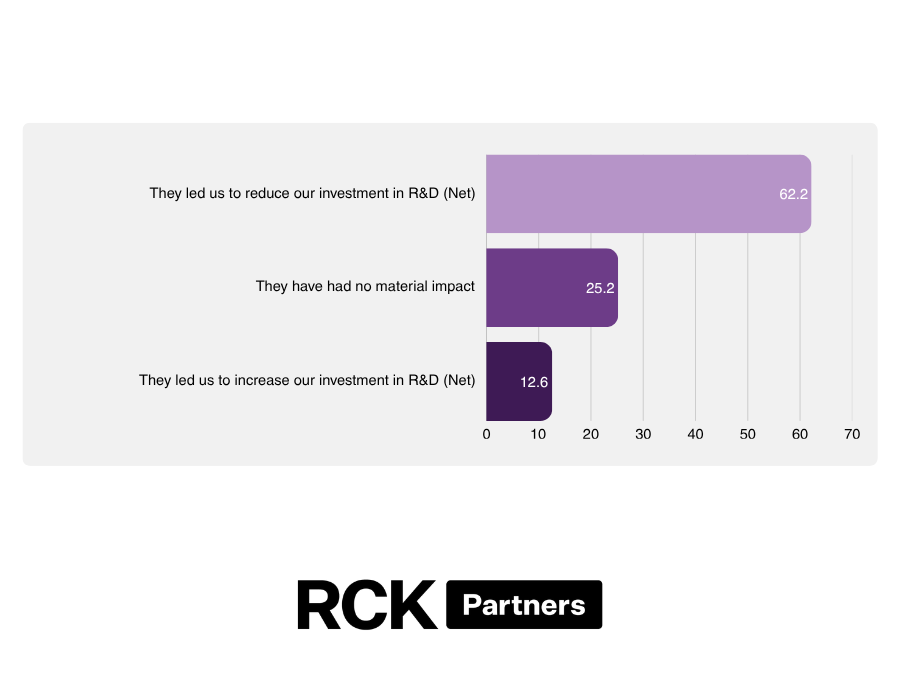
A Times-featured study, commissioned by RCK Partners and conducted by Censuswide, suggests that recent reforms to the UK's R&D tax relief scheme may have gone too far. The research found that measures introduced by HMRC to tackle abuse of the scheme are having unintended consequences for genuine innovators, with many businesses reporting that they have cancelled research initiatives, paused investment plans and reduced skilled headcount as a result of increased uncertainty surrounding the regime.