

Contact
Find us
- 7th Floor, Forum House,
15-18 Lime St, London EC3M 7AN
© 2024 RCK Partners - Company House No: 12396021

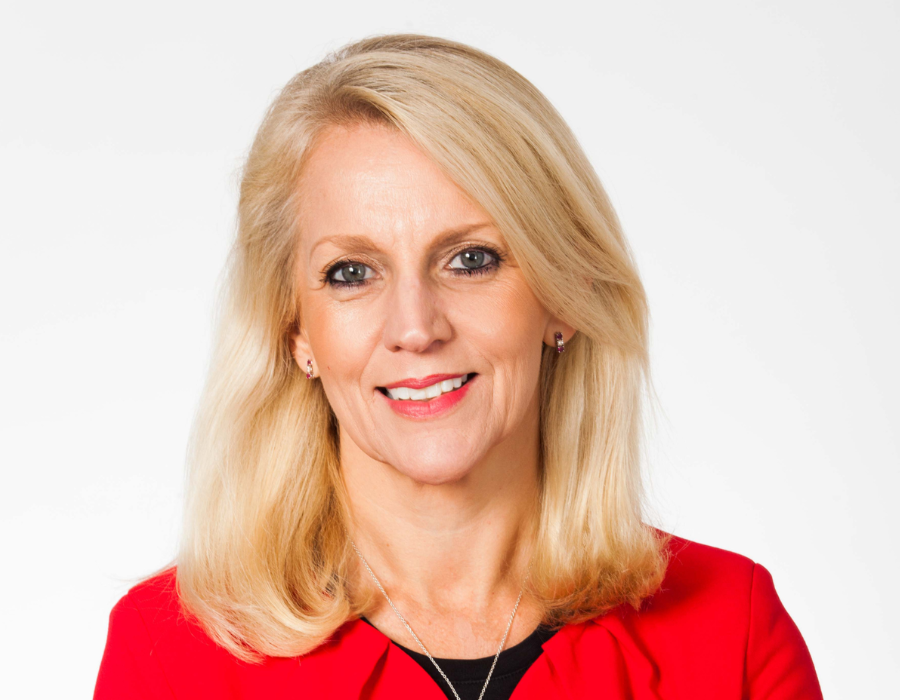
During my career, I’ve had the rare privilege of interacting with many extraordinary leaders, including the likes of Nelson Mandela, Richard Branson, and the broader Virgin leadership team. In terms of leadership style, they operated very differently yet have profoundly shaped how I lead today.
The Virgin ethos:
On walking into Virgin's old London HQ in Hammersmith, you were greeted by a giant sign that was impossible to miss: “Screw it, let’s do it!” Right next to it was a giant slide, connecting the above floors to the reception. That was the vibe at Virgin: bold, fun, and a wacky (in the best way) place to work.
1. Possibility seeking
Richard’s favourite phrase was “Why not?” - a reflection of his insatiable curiosity and a sentiment that echoed that very sign at the Virgin office. At Virgin, I learned that the best leaders do more than solve problems – they seek possibilities and envision what others cannot yet see.
2. Really get to know who you are working with
We believed that for big investments and decisions, you meet in person and look into these people's eyes. This taught me that leadership is ultimately about judgment. That judgment is sharpened through human connection and so we met face-to-face, whenever possible.
3. True customer centricity
Another lesson I learnt at Virgin was the discipline and value of true customer centricity, not as a buzzword, but as a lived philosophy. Whilst we strove to ensure that we got it right first time, every time, we acknowledged that sometimes things don’t go as smoothly. We empowered our staff to turn those moments of misery into moments of magic, transforming service failures into loyalty-building opportunities. That mindset of prioritising the empowerment of the Virgin team resulted in deepening customer trust and loyalty and is a key reason that the Virgin brand has endured and thrived.
Be comfortable with contradiction
At Virgin, I learned perhaps the most uncomfortable leadership lesson, which is being able to live with contradiction.
We were blasting into space while also trying to make the planet a better place. Likewise, at Marex Group plc, a commodities broker, we had mining and energy businesses but also pioneered some innovative ESG initiatives. Balancing people, talent, and profit requires sitting in the tension without becoming paralysed by it, and being able to clearly communicate why, and how, all these activities can co-exist.
Nelson Mandela:
I was still at school when I started to campaign for Mandela’s release. It was a huge privilege to meet with him before his release and formative to my leadership in a very different way.
1. Focus on the long term
Without him realising it, he taught me many lessons, but above all, it was his resilience and capacity for forgiveness that stayed with me. Even in prison, he disciplined himself to think beyond his circumstances, not just about securing his release, but about shaping the country he hoped to build a decade later. That long-term orientation fundamentally shaped how I approach strategy. I learned that true leadership requires the ability to zoom out, rise above immediate pressures, and consider the lasting consequences of today’s decisions.
2. The Power of Symbolic Acts
Another of the most profound lessons Mandela taught me, and the world, was the power of symbolism and the momentum this can create. When he wore the Springbok jersey at the final of the 1995 Rugby World Cup, he said more in that gesture than any speech could convey. The South African rugby jersey was a symbol previously associated with apartheid and now symbolises national unity.
His unwavering commitment to reconciliation showed me that leadership is not asserted, but instead, it is demonstrated. The most effective leaders lead by example.
3. Diversity of thought
Mandela and the Virgin Group (with a special call out to Jean Oelwang, who led Virgin Unite) championed diversity of experience and thought. From both, I learned that building exceptional teams means bringing together people with fundamentally different skills, perspectives, and ways of thinking, and then creating an environment in which that diversity can thrive.
The sporting world:
Whilst I have drawn great lessons from both leaders, I also look to elite athletes in the sporting world to understand the mindset behind sustained high performance and how to translate these mentalities into business. For instance, elite athletes actually spend more time recovering than competing. Yet in business, we tend to celebrate constant motion, mistaking activity for effectiveness and forgetting that endurance, and performing at your peak in the specific moments, matter more than constant activity.
Skills are like muscles: without deliberate training; reflection, recovery, strategic thinking, and honest feedback – they weaken. Sustainable performance requires cycles of exertion and renewal. Without recovery, you are not preparing yourself for the next stage; you are simply reducing your changes of achieving gold next time.
To summarise:
Reflecting on these experiences, I have come to see leadership not as a single style, but as weaving together different strengths and perspectives. It’s about integration. The lessons learned at Virgin gave me the courage to pursue possibilities and embrace contradictions. Nelson Mandela taught me the discipline of patience, to think generationally, to lead symbolically, and to build unity where division once stood.
Today, my leadership philosophy is shaped by that integration. To be ambitious, but accountable. To empower widely but decide firmly, and most importantly, to balance profit with purpose.
A practical guide to Research and Development Allowances (RDAs), including qualifying capital expenditure, laboratories, pilot plants, R&D facilities, interaction with R&D tax relief, and how businesses can maximise tax savings on innovation projects.
The classification of R&D subcontracting ownership remains a highly debated and complex aspect of R&D tax credit claims and has historically led to confusion among claimants. This article explains how to identify R&D ownership for tax purposes.